
100 most dangerous dogs in the world is a search term that often triggers fear, curiosity, and intense debate among pet owners, insurance companies, and lawmakers. At Pet Breeding Club, we believe that knowledge is the key to safety. To truly understand what makes a dog “dangerous,” we must look beyond sensational headlines and examine the statistics regarding bite frequency, bite force, and the history of specific breeds. While it is difficult to list literally one hundred distinct breeds that pose a severe threat, we can analyze the top contenders and the vast array of factors that contribute to canine aggression.
This article explores the breeds most commonly cited in bite statistics, the science of bite force, and the environmental factors that turn a companion animal into a threat.
Defining Danger: Power vs. Temperament
When people compile lists of the 100 most dangerous dogs in the world, they are usually looking at two different metrics: the frequency of bites and the severity of the injury. A Chihuahua, for example, may bite more frequently than a Great Dane, but the damage caused by a Great Dane is exponentially higher due to its size and strength.
Danger is often a result of physical capability combined with improper training. A “dangerous” dog is often simply a powerful working dog that has not been given a job to do. Breeds developed for protection, guarding, or hunting large game have instincts that, if unchecked, can result in tragedy.
The Statistical Leaders
In almost every study conducted by organizations like the CDC (Centers for Disease Control and Prevention) or the AVMA (American Veterinary Medical Association), a few specific breeds consistently appear at the top. When discussing the 100 most dangerous dogs in the world, the following breeds are almost always the first mentioned due to their involvement in fatal or severe attacks.
1. The Pit Bull Terrier
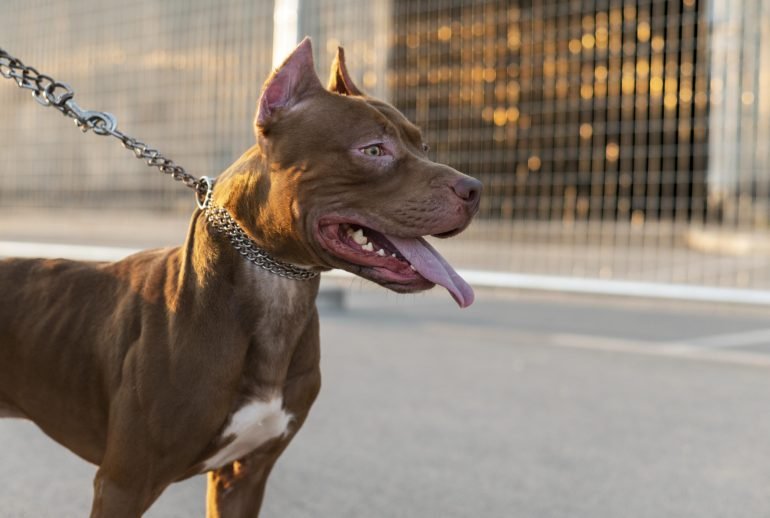
Pit Bulls are the most controversial dogs on the planet. Statistics show they are responsible for a significant percentage of fatal dog attacks in the United States. However, advocates argue this is because “Pit Bull” is an umbrella term covering several breeds (American Pit Bull Terrier, Staffordshire Terrier, etc.) and because they are the #1 breed abused by criminals for fighting. Their immense jaw strength and “gameness” (refusal to give up) make them dangerous in the wrong hands.
2. The Rottweiler
Rottweilers are powerful guardians. Historically used to herd cattle and pull carts for butchers, they have a strong protective instinct. While loyal to their families, they can be aloof and aggressive toward strangers if not properly socialized. In lists of the 100 most dangerous dogs in the world, Rottweilers consistently rank in the top three for causing human fatalities over the last two decades.
3. The German Shepherd
Known for their intelligence and use in police and military work, German Shepherds are capable of inflicting serious harm. Their bite force is substantial (over 238 PSI), and their high prey drive can be triggered by running children or smaller animals. Because they are one of the most popular breeds globally, the sheer number of them contributes to their high ranking in bite statistics.
The Guardians: Large and Powerful
Moving down the list, we encounter breeds that are less common but possess physical traits that demand respect. Any compilation of the 100 most dangerous dogs in the world must include the heavyweights of the canine kingdom—the Mastiffs and livestock guardians.
The Presa Canario
Originating from the Canary Islands, this breed was used for working livestock. They are large, muscular, and have a very high distrust of strangers. They gained infamy in the early 2000s due to a high-profile fatal attack in San Francisco.
The Cane Corso
An Italian mastiff breed, the Cane Corso is a descendant of Roman war dogs. They are magnificent and imposing. While generally indifferent to strangers rather than aggressive, their sheer power means an attack can be catastrophic. An untrained Cane Corso is a liability, earning its spot in conversations about the 100 most dangerous dogs in the world.
The Doberman Pinscher
Dobermans are the Ferraris of the dog world—fast, sleek, and powerful. Bred specifically for personal protection by a German tax collector, they are incredibly loyal. However, they can be sharp and reactive. While modern breeding has softened their temperament, they remain a breed that requires a firm, experienced handler.
The Rare and The Banned
Some dogs are considered so dangerous that they are banned in various countries under Breed Specific Legislation (BSL). When analyzing the 100 most dangerous dogs in the world, we have to look at breeds like the Tosa Inu and the Fila Brasileiro.
-
Tosa Inu: A Japanese fighting dog bred for silence and stoicism in the ring. They are banned in the UK and several other countries because they were bred solely for combat.
-
Fila Brasileiro: The Brazilian Mastiff is known for its “ojeriza,” or hatred of strangers. It is an intense tracking and guarding dog that is not suitable for the average household.
-
Dogo Argentino: Bred to hunt wild boar and pumas, these white giants are fearless. Their high prey drive and pain tolerance make them formidable.
The Science of Bite Force
Another way to categorize danger is by raw physical potential. If we rank the 100 most dangerous dogs in the world by bite force alone, the list changes slightly. Bite force is measured in PSI (Pounds per Square Inch).
-
Kangal: The Kangal, a Turkish livestock guardian, holds the record with a bite force of 743 PSI. This is enough to crush bone effortlessly.
-
English Mastiff: These gentle giants can exert 552 PSI. While rarely aggressive, their potential for damage is limitless.
-
Wolf-Hybrids: Mixing a domestic dog with a wild wolf creates an unpredictable animal. Wolf-hybrids retain wild predatory instincts and are often responsible for attacks on small children who they may view as prey.

A closeup of a wet rottweiler puppy enjoying a sunny day at a pool
Small Dogs and Aggression
It is a common misconception that only big dogs are dangerous. If we were to list the 100 most dangerous dogs in the world based solely on aggression frequency rather than fatality, breeds like the Chihuahua, Jack Russell Terrier, and Dachshund would top the list.
Small dogs often suffer from “Small Dog Syndrome,” where owners tolerate aggressive behaviors like growling and snapping because the dog is tiny. However, a pack of aggressive small dogs or a bite to a child’s face from a Cocker Spaniel is still a serious medical event. The aggression is there; only the mass is missing.
The Role of Humans in Creating Danger
At Pet Breeding Club, we emphasize that biology is only half the equation. A comprehensive review of the 100 most dangerous dogs in the world reveals a disturbing pattern: human negligence.
Lack of Socialization
The critical window for puppy socialization is between 3 and 14 weeks. If a powerful breed like an Akita or a Chow Chow is not exposed to different people, sounds, and environments during this time, they can grow up to be fearful. Fear is the root cause of most aggression.
Abuse and Neglect
Dogs that are chained up outside, starved, or beaten are significantly more likely to attack. These dogs bite out of defense or resource guarding. When the media reports on the 100 most dangerous dogs in the world, they rarely mention the background of the specific dog involved—was it a beloved family pet, or a yard dog ignored for years?
Poor Breeding
Backyard breeders and puppy mills often ignore temperament. Responsible breeders breed for stability. Unethical breeders breed for size or color, often ignoring genetic aggression. This creates unstable lines within breeds that are typically safe.
Breed Specific Legislation (BSL)
Many governments have attempted to solve the issue of dangerous dogs by banning specific breeds. This approach suggests that we can simply identify the 100 most dangerous dogs in the world and outlaw them. However, BSL is widely considered a failure by experts.
Banning Pit Bulls often leads to a rise in popularity of similar, unregulated breeds like the Presa Canario or Cane Corso. Furthermore, it gives the public a false sense of security. A Golden Retriever can bite if it is in pain or threatened. Focusing on the breed rather than the behavior is a flaw in public safety policy.
Preventing Dog Bites
Regardless of whether you own a Labrador or one of the breeds often listed among the 100 most dangerous dogs in the world, safety protocols remain the same.
-
Education: Teach children never to approach a strange dog and never to disturb a sleeping or eating dog.
-
Supervision: Never leave a baby or young child alone with a dog, regardless of the breed. Even the most tolerant dog has a breaking point.
-
Training: Obedience training is not just about tricks; it establishes communication. A dog that knows “Leave It” or “Stay” is safer than one that does not.
-
Spaying and Neutering: Intact male dogs are involved in the majority of fatal dog attacks. Reducing hormonal drive can reduce roaming and dominance-based aggression.
The Myth of the “Locking Jaw”
One of the most persistent myths surrounding the 100 most dangerous dogs in the world, particularly Pit Bulls and Boxers, is the idea of the “locking jaw.” Anatomically, no dog breed has a mechanism that locks their jaw in place. What they do have is determination. Terriers and Bulldogs are bred to hold on, but this is a behavioral trait, not a physical locking mechanism.
Identifying Warning Signs
Before a bite occurs, dogs almost always give warning signs. A “dangerous” dog is often a misunderstood dog shouting for space. Signs include:
-
Whale Eye: Showing the whites of the eyes.
-
Lip Licking: A sign of anxiety.
-
Stiff Body Posture: Freezing in place.
-
Tail Position: A high, vibrating tail can signal arousal and potential aggression, not happiness.
Understanding these signals can prevent a dog from ending up on a list of the 100 most dangerous dogs in the world simply because it reacted to a stressful situation.
Conclusion: Respect the Animal
Ultimately, the concept of the 100 most dangerous dogs in the world is a reminder of the power of nature. Dogs are predators that we have invited into our homes. While thousands of years of domestication have made them companions, they retain their teeth, their instincts, and their physical capabilities.
The most dangerous dog is not necessarily the one with the biggest muscles or the worst reputation; it is the one that is unsocialized, untrained, and misunderstood. By choosing the right breed for your lifestyle, committing to training, and treating the animal with respect, the risk of danger can be minimized. At Pet Breeding Club, we encourage you to look past the statistics and see the individual dog, while always respecting the potential power at the other end of the leash.
Sources
-
Centers for Disease Control and Prevention (CDC): Dog Bite Prevention and Statistics.
-
American Veterinary Medical Association (AVMA): Dog Bite Risk and Prevention: The Role of Breed.
-
Psychology Today: Canine Aggression and the Myths of Dangerous Breeds.
-
National Geographic: Bite Force and Animal Mechanics.
-
Journal of the American Animal Hospital Association: Mortality and Morbidity of Dog Attacks.