
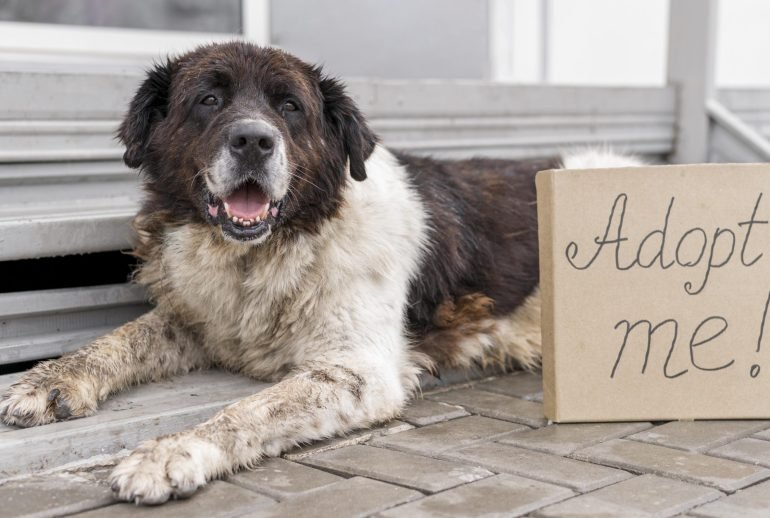
10 dog behaviors explained offers an essential guide to bridging the communication gap between you and your canine companion. As responsible pet owners and enthusiasts at Pet Breeding Club, we know that understanding why your dog does what it does is the key to effective training, deeper bonding, and resolving behavioral issues. Unlike humans, dogs rely heavily on subtle, non-verbal cues and instincts rooted in their evolutionary past.
Misinterpreting these signals can lead to frustration or, worse, escalating fear or aggression. This expert guide dives deep into the ethological roots and practical interpretations of the most common behaviors observed in dogs today. We believe that mastering these foundational concepts is the first step toward true canine partnership.

1. The Head Tilt: The Sign of Acute Listening
One of the most endearing behaviors is the sudden, asymmetrical tilt of a dog’s head when they hear a new sound or a specific human word.
The Explanation: Experts theorize that the head tilt serves two primary functions. First, it is a way to adjust the placement of the outer ear to better pinpoint the source and distance of an unfamiliar or complex sound. Given that dogs hear much higher frequencies than we do, adjusting the ear angle can help them isolate a familiar tone (like their name) within a stream of human speech. Secondly, some scientists believe the head tilt may be related to visual obstruction. A dog’s muzzle can partially block their view of a human’s lower face, making it harder to read subtle mouth movements. The tilt allows them to see our full faces, optimizing both auditory and visual input.
2. The “Zoomies” (FRAPs): Releasing Pent-Up Energy
Known scientifically as Frenetic Random Activity Periods (FRAPs), the “zoomies” are defined by sudden, chaotic bursts of speed, often characterized by spinning in circles or frantic running.
The Explanation: The zoomies are a common way for dogs to discharge pent-up energy, particularly after a stressful event (like a bath or a vet visit), or after a period of prolonged inactivity (like waking up from a nap or being crated). This is a completely normal, healthy behavioral release mechanism. While seemingly random, a recurring pattern often emerges: they frequently happen in the evening or when the dog is suddenly freed from restraint. Understanding this behavior is vital, as it is a clear indicator that the dog needed an energy outlet. When we look at 10 dog behaviors explained, this one is the purest expression of canine joy.
3. Circling Before Lying Down: The Ancient Bedtime Ritual
Almost all dogs engage in a ritual of walking in one or more circles before finally settling down for a nap or the night.
The Explanation: This is a classic example of an instinctual, inherited behavior rooted in the dog’s wild ancestry. Before domesticated dogs had plush beds, their ancestors (wolves and wild canids) would circle for several practical reasons:
-
Creating a Den: Trampling down tall grass or leaves to create a comfortable, flat sleeping spot.
-
Scent Marking: Placing their scent on the bed to mark their territory.
-
Threat Check: Ensuring no immediate threats (snakes or insects) were hidden in the bedding.
-
Temperature Regulation: Facing into the wind or positioning themselves optimally to regulate warmth.
Though your dog’s couch is soft and clean, the compulsion to circle is a genetic memory.
4. The “Guilty Look”: Submission, Not Shame
The classic posture—low head, averted eyes, tucked tail—that dogs display when they have chewed a slipper or soiled the rug is often misinterpreted as guilt.
The Explanation: According to canine behaviorists, dogs do not possess the complex moral framework necessary for feeling “guilt” as humans understand it. This submissive posture is actually a reaction to the owner’s body language and tone of voice. If you approach your dog in an angry, frustrated, or aggressive manner, the dog is performing an immediate appeasement behavior, saying, “Please stop; I mean no harm.” They are reacting to your current emotion, not confessing to an action performed an hour ago. When analyzing 10 dog behaviors explained, this is the most frequently misunderstood by owners.
5. Licking and Grooming: More Than Just Affection
Licking, whether directed at you, themselves, or other dogs, is a multifaceted behavior.
The Explanation: Licking is a primary means of communication and maintenance.
-
Affection: Licking a human’s hand or face is often an appeasement or greeting gesture, inherited from puppies who lick their mother’s face to solicit food.
-
Grooming: Licking themselves or a pack mate is part of hygiene and social bonding, releasing calming endorphins.
-
Scent Gathering: A dog licking the air or a surface is often trying to transfer scent particles to the Jacobson’s organ (vomeronasal organ) on the roof of their mouth, allowing them to “taste” the smell. This allows for incredibly detailed social and environmental information gathering.
6. The Play Bow: An Essential Invitation
The play bow is the universal sign in the canine world: the dog lowers its front end to the ground while keeping its rear end raised, often accompanied by a tail wag.
The Explanation: This is a meta-communication signal, meaning it is a signal about a signal. The play bow precedes actions that might otherwise be interpreted as aggressive (like biting, chasing, or jumping). By initiating the bow, the dog is saying, “Everything that follows is just play.” It manages the social dynamics of the interaction. When discussing 10 dog behaviors explained, this one is crucial for social harmony; it shows the dog is ready for fun, not a fight. The bow is an invitation that clearly sets the intent as non-serious.
7. Excessive Yawning: A Calming Signal
While yawning often indicates fatigue, if your dog yawns frequently during training, during a hug, or at the vet’s office, it carries a different meaning entirely.
The Explanation: In stressful or uncomfortable situations, yawning is a calming signal. It is an involuntary behavior used by the dog to cope with anxiety, or sometimes, to communicate to others (including humans) that they are feeling uneasy or attempting to diffuse tension. Recognizing the difference—yawning in the morning versus yawning while you are trimming their nails—is essential for understanding their emotional state. If your dog yawns repeatedly while you are scolding them, they are trying to communicate stress, not boredom.

8. Paw Lifting and Pointing: The Hunting Instinct
The behavior of lifting one front paw, sometimes hovering it in the air, is particularly common in hunting and sporting breeds like pointers, setters, and retrievers.
The Explanation: This is an evolutionary behavior known as “pointing,” a genetic trait heavily reinforced in hunting breeds. It signifies that the dog has detected a scent or sight of prey and is momentarily frozen, attempting to locate or stalk it. Even if your dog is pointing at a dust bunny in your living room, they are exhibiting this primal hunting pose. In non-sporting breeds, lifting the paw can also be a sign of mild anxiety or uncertainty, asking a question like, “What should I do now?”
9. Scent Rolling: The Need to Blend In
The odd, and often gross, behavior of rolling vigorously in smelly materials (like animal droppings or dead creatures) serves a functional purpose, even if it bothers us.
The Explanation: This is another highly ingrained instinct dating back to the wolf. By rolling in powerful scents, the animal is trying to mask its own odor. In the wild, this allowed the wolf to sneak up on prey without being detected by its own unique smell. It could also be a form of information gathering, carrying the strong scent back to the rest of the pack. When reviewing 10 dog behaviors explained, remember that to a dog, that horrible smell is a highly valuable asset in the field.
10. Digging and Scratching: Beyond Boredom
While destructive digging is often associated with boredom, scratching at the ground or furniture has deeper behavioral roots.
The Explanation: Digging has various motives:
-
Thermoregulation: Dogs dig to create a cool, damp bed in the summer.
-
Caching: Burying treats or bones for later, another ancient survival instinct.
-
Scent Marking: Dogs have scent glands in their paws, and vigorous scratching of the ground after eliminating waste is a powerful visual and olfactory territorial display.
Understanding this dual purpose—relief/storage versus territorial marking—is key to managing the behavior.
The Ethological Approach to Behavior
Understanding these 10 dog behaviors explained requires viewing your pet through the lens of ethology. We cannot anthropomorphize their actions; we must interpret them based on canine biological needs and historical pressures. For example, excessive barking at the door is often misinterpreted as simple aggression, but it is fundamentally territorial protection driven by pack loyalty.
Many owners face challenges that could be solved by simply recognizing these signals. A puppy that yawns constantly during training is not being defiant; it needs a break. A dog that circles repeatedly is seeking comfort and security. Learning this canine ethogram is essential for building a trusting relationship.
Building Better Communication
The true value of examining 10 dog behaviors explained is the ability to anticipate and meet your dog’s needs proactively. A well-understood dog is a well-behaved dog. By recognizing calming signals, you can remove your dog from a stressful situation before they escalate to growling or snapping.
This deep dive into 10 dog behaviors explained should serve as a foundation for all responsible pet owners. It moves beyond simple commands and delves into the mind of your companion. When you know why the tail is wagging (sometimes it means arousal, not happiness), you can interact more safely and effectively. This level of understanding is what separates a good owner from a great one.
Ultimately, the goal of compiling 10 dog behaviors explained is to advocate for mutual respect in the human-canine relationship. Never stop observing, learning, and communicating with your best friend.
Sources
-
American Veterinary Society of Animal Behavior (AVSAB): Behavioral Guidelines and Communication.
-
Mech, L. D. (1970). The Wolf: The Ecology and Behavior of an Endangered Species. (Classic work on canine ancestry).
-
Overall, K. L. (2013). Manual of Clinical Behavioral Medicine for Dogs and Cats. (Expert interpretation of behaviors like yawning and circling).
-
Applied Animal Behaviour Science Journal: Studies on the Function of the Canine Head Tilt.
-
Coren, S. (2011). Do Dogs Dream? (Analysis of canine sleep and behavior).
-
Pet Breeding Club Research Division: In-house ethological observations.