
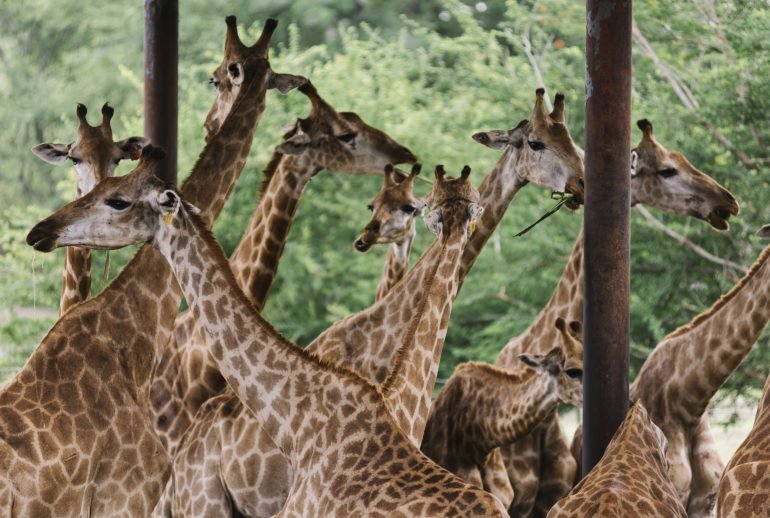
10 wild animals represent the untamed spirit of our planet, showcasing the incredible diversity of evolution, survival instincts, and biological engineering that nature has perfected over millions of years. At Pet Breeding Club, our primary focus is usually on the cats, dogs, and small mammals that share our homes. However, to truly appreciate the domestic friends curling up on our sofas, we must understand their wild counterparts and the other majestic creatures that roam the Earth.
Understanding wildlife helps us become better stewards of the planet and better owners to our pets. It teaches us about behavior, habitat, and the delicate balance of ecosystems. In this extensive guide, we will journey across continents—from the freezing Arctic tundra to the scorching African savannas—to explore the most fascinating creatures in existence. Here is our curated list of the top 10 wild animals that everyone should know, along with the amazing facts that make them unique.
1. The African Lion (Panthera leo)
When compiling a list of 10 wild animals that command respect, the Lion is inevitably the first to come to mind. Known as the “King of Beasts,” the lion is the only cat species that displays a significant difference in appearance between males and females (sexual dimorphism) and the only one to live in large social groups called prides.
Amazing Fact:
A lion’s roar is not just a noise; it is a sonic weapon. It can be heard from up to 5 miles (8 kilometers) away. This roar is used to mark territory and communicate with the pride. Unlike our house cats, lions cannot purr. Their throat structure is designed for roaring, not purring. The social structure of the pride is surprisingly feminist; the females (lionesses) do 90% of the hunting, working in coordinated teams to take down prey much larger than themselves, while the males protect the territory.
2. The African Elephant (Loxodonta africana)
No diverse collection of 10 wild animals is complete without the largest land mammal on Earth. Elephants are renowned for their intelligence, memory, and complex emotional lives. They are one of the few species, alongside humans and dolphins, capable of recognizing themselves in a mirror, indicating a high level of self-awareness.
Amazing Fact:
An elephant’s trunk is a biological marvel. It contains over 40,000 distinct muscles—more than the entire human body. It is strong enough to rip a tree from the ground yet precise enough to pick up a single blade of grass. Furthermore, elephants communicate using “infrasound,” a low-frequency rumble that travels through the ground. Other elephants can pick up these vibrations through their feet from miles away, effectively allowing them to “hear” with their toes.
3. The Gray Wolf (Canis lupus)
Looking at the genetic history of pets helps us appreciate 10 wild animals like the Gray Wolf, the direct ancestor of every domestic dog, from the Chihuahua to the Great Dane. Wolves are the ultimate pack hunters, relying on stamina and teamwork rather than pure speed.
Amazing Fact:
A wolf pack is a nuclear family, usually consisting of a breeding pair (often called the alpha pair) and their offspring. Their howling is not done at the moon; it is a GPS system. It helps pack members locate each other and warns rival packs to stay away. Biologically, they are designed for the “long game.” A wolf can trot at a steady pace of 5 miles per hour for nearly the entire day, wearing down prey simply by refusing to stop. This stamina is a trait we still see in working dog breeds like Huskies and Malamutes.
4. The Bottlenose Dolphin (Tursiops truncatus)
Aquatic life is essential when discussing 10 wild animals that display high intelligence. Dolphins are not fish; they are mammals that breathe air and nurse their young. They are famous for their playfulness, but their cognitive abilities are what truly set them apart.
Amazing Fact:
Dolphins sleep with only half of their brain at a time. Because they are conscious breathers (they must decide to take a breath), they cannot go fully unconscious like humans. One hemisphere of the brain sleeps while the other remains alert to keep the dolphin swimming and breathing. They also have “names.” Each dolphin develops a unique “signature whistle” early in life, which they use to identify themselves to others, proving they have a distinct sense of individual identity.
5. The Tiger (Panthera tigris)
Among the 10 wild animals listed here, the tiger is the largest cat species in the world, heavier and stronger than the lion. Unlike the social lion, the tiger is a solitary hunter, relying on stealth and camouflage to survive in the dense jungles of Asia.
Amazing Fact:
A tiger’s stripes are not just fur-deep; they are tattooed on their skin. If you were to shave a tiger, the stripe pattern would still be visible on its skin. Just like human fingerprints, no two tigers have the exact same pattern of stripes. This allows researchers to identify individual tigers in the wild. They are also one of the few cats that love water and are powerful swimmers, capable of crossing rivers up to 18 miles wide.
6. The Bald Eagle (Haliaeetus leucocephalus)
To represent the sky in our top 10 wild animals, we look to the Bald Eagle, a symbol of power and freedom. These raptors are apex predators of the air, using gravity and incredible eyesight to hunt fish and small mammals.
Amazing Fact:
“Eagle eye” is not just a figure of speech. An eagle’s vision is estimated to be 4 to 8 times stronger than that of the average human. They can spot a rabbit from two miles away. Even more impressive is their nest-building capability. Bald Eagles build the largest tree nests of any North American bird. Some nests have been recorded to weigh over 2,000 pounds (1 ton) and measure 10 feet across, reused and added to year after year.
7. The Polar Bear (Ursus maritimus)
Few of the 10 wild animals on this list face a harsher environment than the Polar Bear. Living in the Arctic circle, they are classified as marine mammals because they spend most of their lives on the sea ice hunting seals.
Amazing Fact:
Despite appearing white, a polar bear’s fur is actually transparent and hollow. The hollow hairs reflect light, making the bear appear white for camouflage in the snow. Underneath that thick coat, their skin is jet black to absorb as much heat from the sun as possible. They are also incredibly strong swimmers, capable of swimming steadily for days at a time to find ice floes, with paws that act like large paddles measuring up to 12 inches across.
8. The Mountain Gorilla (Gorilla beringei beringei)
Studying 10 wild animals often reveals uncomfortable truths about how similar we are to nature. The Mountain Gorilla shares roughly 98% of its DNA with humans. They live in close-knit troops in the cloud forests of Africa and exhibit profound gentleness and grief.
Amazing Fact:
Gorillas make a new bed every single night. They construct “nests” out of leaves and branches, either on the ground or in trees, to sleep in. They never sleep in the same nest twice. Despite their massive size and strength (a silverback can lift ten times his body weight), their diet is almost entirely vegetarian, consisting of leaves, shoots, and fruit. They play a crucial role in their ecosystem by dispersing seeds through their waste.
9. The Great White Shark (Carcharodon carcharias)
Fear often surrounds specific entries on a list of 10 wild animals, and the Great White Shark is the ocean’s most feared predator. However, they are not mindless eating machines; they are sophisticated hunters with sensory systems that humans can barely comprehend.
Amazing Fact:
Sharks have a “sixth sense.” They possess special organs located on their snout called the Ampullae of Lorenzini. These pores allow them to detect the electromagnetic fields emitted by the muscle movements of other living creatures. This means a Great White can find prey hiding under the sand or in murky water simply by sensing the electricity of their heartbeat. They also go through over 30,000 teeth in a lifetime, as their teeth are constantly replaced like a conveyor belt.
10. The Cheetah (Acinonyx jubatus)
Speed is the defining trait of the last of our 10 wild animals. The Cheetah is the fastest land animal, built purely for aerodynamics. Unlike other cats, they cannot climb trees well, but they can outrun a sports car.
Amazing Fact:
A cheetah can accelerate from 0 to 60 miles per hour in just 3 seconds. During a full sprint, which can reach 70 mph, the cheetah spends more time in the air than on the ground. To maintain traction at these speeds, they have semi-retractable claws (like soccer cleats) that dig into the earth, unlike other cats whose claws retract fully. Their long tail acts as a rudder, allowing them to make sharp 90-degree turns while chasing gazelles without losing balance.
Why Conservation Matters
Why do we at Pet Breeding Club create guides about wildlife? Because protecting these 10 wild animals is crucial for the health of our planet. Biodiversity ensures clean air, clean water, and a stable climate. When apex predators like wolves or sharks are removed from an ecosystem, the balance collapses, leading to overpopulation of other species and disease.
Many of the animals on this list are currently threatened or endangered due to habitat loss, poaching, and climate change. Understanding their unique biology helps foster the empathy needed to support conservation efforts.
Wild Animals vs. Domestic Pets
It is important to clarify the difference between household pets and these 10 wild animals. Domestication is a process that takes thousands of years. It involves changing the genetics of an animal to make it tame, manageable, and dependent on humans.
Wild animals, no matter how “cute” they appear when young, retain their wild instincts. A tiger cub may play like a kitten, but it will grow into a 500-pound predator with a prey drive that cannot be trained away. A chimpanzee may smile, but it is a sign of fear or aggression, not happiness. We admire these creatures from a distance—in reputable zoos, sanctuaries, or documentaries—but we must respect their nature by keeping them in the wild where they belong.
Conclusion
From the depths of the ocean to the peaks of the mountains, nature has crafted extraordinary survivors. This collection of 10 wild animals showcases the beauty of adaptation. The elephant’s memory, the wolf’s stamina, the eagle’s vision, and the shark’s senses are all reminders of the complexity of life.
We hope you enjoyed this guide to 10 wild animals and learned something new about the neighbors we share this planet with. At Pet Breeding Club, we believe that loving animals extends beyond the dog on your leash or the cat on your lap; it encompasses a respect for all living things. Let these amazing facts inspire you to support wildlife conservation and keep the wild, truly wild.
Sources
-
National Geographic: Animal Encyclopedia and Species Facts.
-
World Wildlife Fund (WWF): Species Directories and Conservation Status.
-
The Smithsonian National Zoo: Animal Care and Biology Facts.
-
San Diego Zoo Wildlife Alliance: Animals and Plants Guide.
-
BBC Earth: The Hunt and Planet Earth Series Documentation.